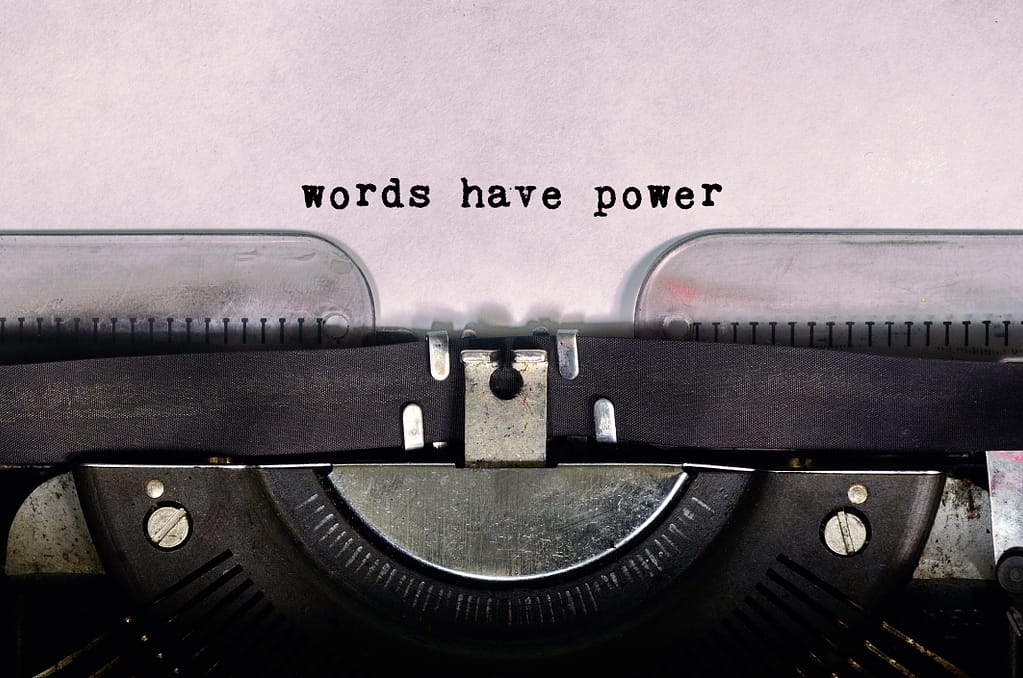

Want to feel more powerful on the court? Change your vocab
If you’d like to feel more powerful on the court, besides adjusting your stroke to gain more momentum – change your vocabulary.
In Power v. Force, Dr. David R. Hawkins writes about the frequency to which emotions vibrate. In his map of consciousness, Dr. Hawkins uses a kinesiological scale to measure emotions from 1-1000.
For instance, when you feel at peace, you vibrate to 600. When you’re feeling grief, and not feeling powerful, you vibrate to 75 on the scale.
Words evoke emotions and vice versa. When you’re in a specific emotional state, your vocabulary will reflect that state. Think about what someone’s emotional state is after asking how they’re doing, and they answer, “I’m alright (ho-hum),” versus “I’m well.”
We talk to ourselves on the court all the time, whether out loud or in our minds. Ponder the word “should”. If you “should” do something, you’re being admonished. That’s shame.
“I should have made another shot.” Shame – 20 on the scale.
Or apologizing for not playing your best. Guilt – that’s a 30.
How can you change your vocabulary to match a more powerful vibration?
You instinctively know which words vibrate to higher frequencies – you know whether it feels better when you say or hear them.
For instance, instead of shaming yourself with “should”, you can tell yourself, “I’m willing to make better decisions on the court.” That’s a much more powerful 310.
Choose words that resonate and make you feel good.
Next time you play, take note of what you say to yourself and to your partner. If it makes you feel low or even ho-hum, consciously choose words that make you feel better. And there is power in that.
(Note: As an Amazon Associate, we earn from qualifying purchases.)