
Perfectly imperfect
Wabi-sabi is the Japanese aesthetic of seeing the beauty in the imperfections in art, as well as in things that are temporary and aged.
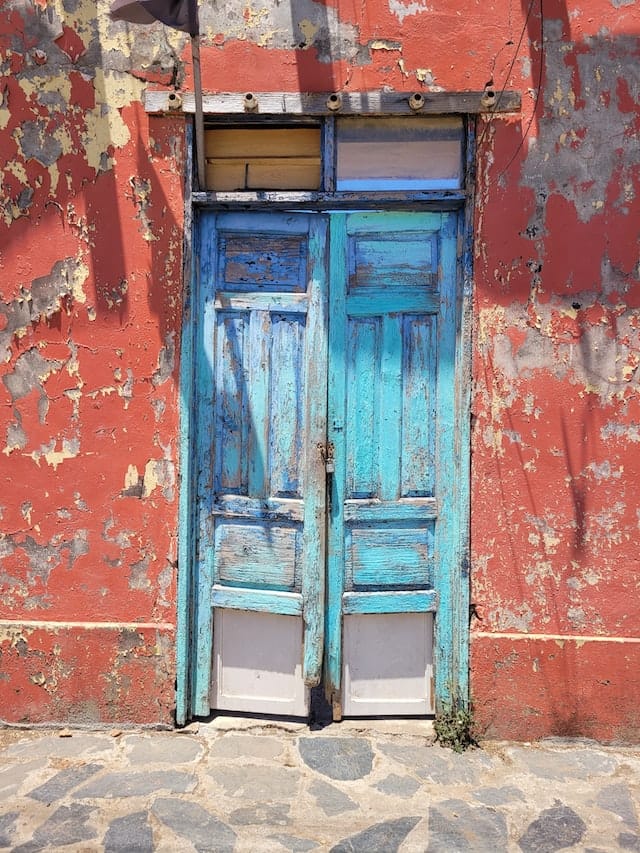
Look at these doors.
The paint on the wall is chipped, the doors are crooked. Who knows what’s going on in that storage space above the doors. And it’s beautiful. To me, this is a perfect (pun intended) example of wabi-sabi.
When I look at this image, I want to know its history, and all the stories it could tell! I want to know if there are different paths you could take going in on the left side versus the right.
It’s much more interesting than a door, completely symmetrical and painted with no holes. It feels alive!
In art, it’s probably easier to cherish and honor wabi-sabi than it is to honor the wabi-sabi in yourself and whatever appears in front of you in your life path.
When life is going perfectly, we sometimes feel it’s too good – that the floor will drop underneath our feet. And when imperfection appears, we tell ourselves that we were right all along.
We stress when things go “wrong” – or what we deem unacceptable in a perfect path. But what if you appreciated and truly accepted the beauty in the wrongness of life?
Every success leads somewhere. Every failure leads somewhere. Even stagnancy leads somewhere. Still water becomes mud. That is still a change from here to there.
Appreciating the beauty of the journey can be difficult when getting older and imperfections are at every turn.
However, when you reflect, the stories and beauty of this wabi-sabi odyssey are astounding.
When you lose someone, do you shed a tear for their perfect hair, or how they did everything right at all times?
No, you miss their crooked smile, their knocked knees, and Hawaiian shirts in six feet of snow.
That’s wabi-sabi. And it’s perfect.